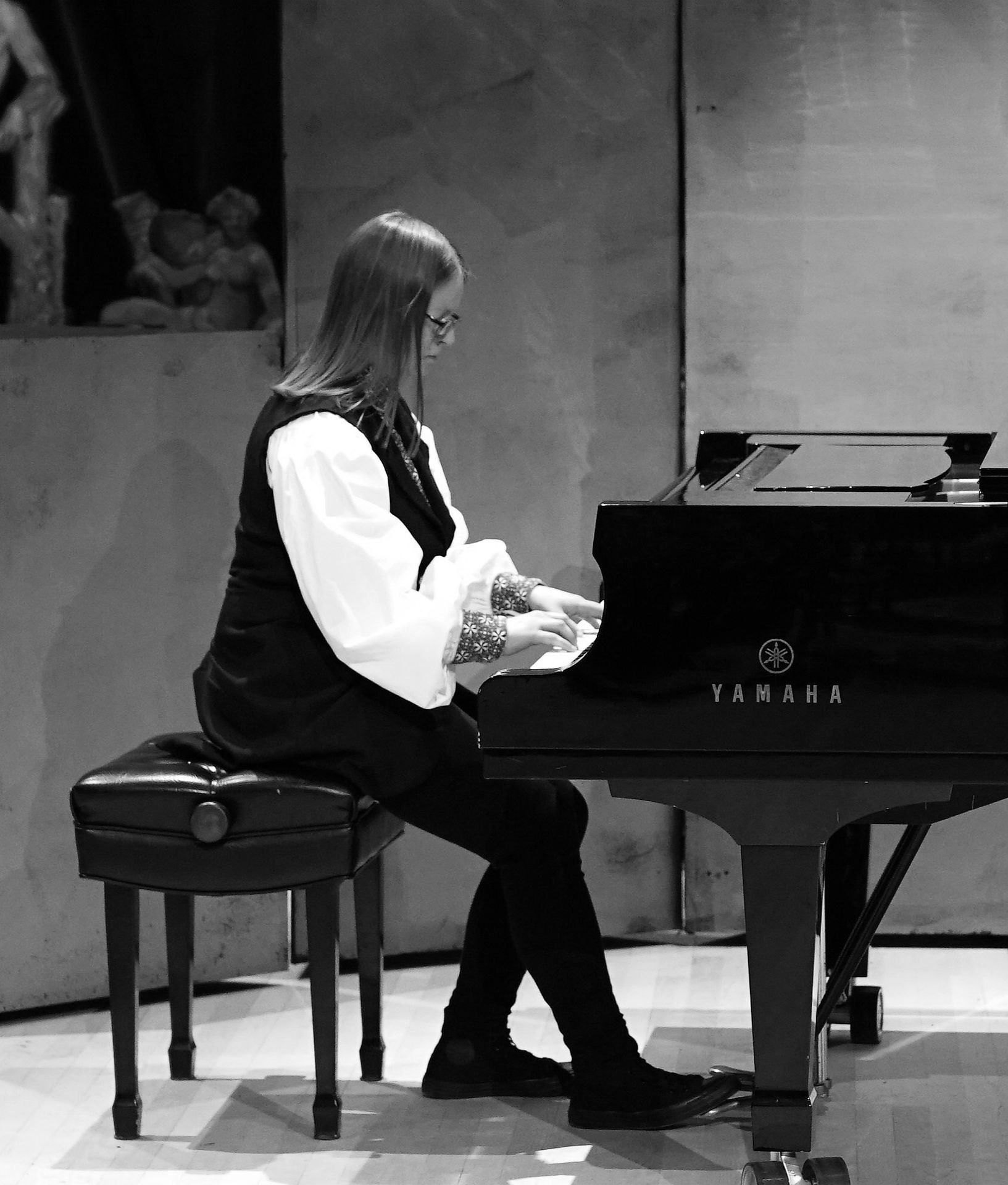
Olga Kern with NOSPR - Katowice, PL (04/12/2025)
On the evening of Thursday, December 4th, I had the pleasure of attending a sold-out performance at the concert hall of the National Polish Radio Symphony Orchestra in Katowice. Although this wonderful orchestra, under the exceptional direction of Marin Alsop, began the evening with a lovely rendition of Iryna Aleksiychuk’s Go Where the Wind Takes You and concluded with a monumental presentation of Beethoven’s Fifth Symphony, it was pianist Olga Kern’s stunning performance of the Grieg concerto that truly crowned the event.
From the very beginning of the first movement, Kern captured the attention of the audience, which remained in her grasp until long after the piece ended. With the onset of the opening piano fanfare, she made it clear that there was not one, but two orchestras on stage that evening, engaged in a symbiotic relationship characterized by almost perfect balance and musical exchanges. This was, of course, also a testament to the individual and collective musicianship of the orchestra members and conductor, but it was Kern’s remarkable attention to voicing and tone color that made this musical synthesis possible. Although there was no mistaking her sound for that of a woodwind or brass instrument, during the cadenza and other solo passages, the absence of the orchestra never resulted in a loss of textural complexity or color. Kern’s control and differentiation of individual voices so masterfully crafted an engaging musical dialogue that it became hard to believe they could have originated from a single person. This clarity and multiplicity of voice combined with nuanced changes in tone color to create the impression that the entire orchestral palette had been perfectly replicated and transposed to the “timbral key” of the piano. If the orchestra sonically embodied the full color spectrum, then Kern transformed this rainbow of sound into a shimmering, silvery iridescence—softer, but no less vibrant.
The end of Kern’s captivating cadenza at the close of the first movement exemplified her sensitivity to the orchestra, so effectively preparing their return that the entrance felt like the continuation of a single thought rather than a separate one. This level of rapport continued in the third movement, where piano passages intertwined with those of the upper woodwinds to weave a musical tapestry of complementary colors. Such effortless exchanges and dialogue between piano and orchestra permeated the concerto, but they were perhaps most notable in the second movement. Here, Kern’s tone often took on a liquid clarity that was reminiscent of fresh mountain streams bathed in luminous, silvery-white moonlight. Combined with her sensitivity to the orchestra, these moments resulted in such exquisite musical effect that I can feel tears returning to my eyes even now as I remember them.
Throughout the concerto, Kern’s sonic sleight of hand was so skillful and her touch so smooth that the rippling arpeggiations of the first and third movements almost perfectly mimicked the articulation of a harp, at one point compelling me to open my eyes, searching for one despite knowing it was not part of Grieg’s orchestration. That each of these flourishes culminated in a single note, which hung like a star above the texture and glittered with the brilliance of an expertly cut diamond, enhanced the magic of these passages. While true perfection is of course impossible, Kern’s performance achieved something that is, in my mind, even better: any minor imperfections that may have been present were so far eclipsed by the abundance of wonder and delight she consistently evoked that they went unnoticed and might as well not have existed, apart from imbuing the music with a level of humanity and connection that perfection alone could never achieve. Based on the warmth of the applause at the end of the final movement and the enthusiasm with which both her encores were met, the rest of the audience seemed to agree.
As marvelous as the concerto was, both of Kern’s encores were equally impressive despite their smaller scale. The first of these, Debussy’s “Feux d’artifice” (“Fireworks”) prelude exemplified not just its title, but the entire concept of musical impressionism. Unlike the gentle iridescence that characterized her sound in the Grieg concerto, here Kern’s tone and articulations in the upper voices produced bold flashes of contrasting colors, patches of light reflected in the deep, velvety sound of her bass. As I listened, I was vividly reminded of a photograph I had taken in Bydgoszcz a couple of weeks earlier (shown below) of the city lights reflecting off the water like something out of a Van Gogh painting. The vibrancy and energy of Kern’s playing somehow transformed the music into a synesthetic experience that transcended the boundaries of both sight and sound. In fact, it was the remarkable contrast between these rippling bursts of musical light and the rich, sustained bass notes which accompanied them that finally brought to mind the fact that the piano possesses pedals. Prior to this moment, Kern’s pedaling was so skilled and unobtrusive that it completely faded from consciousness, until the seemingly impossible nature of her sound forced one to marvel at the technique that produced it. At one point, the performance was so captivating that the final note of a descending passage was accompanied by an audible breath of appreciation from the audience—myself included.

In her second and final encore, short “Étincelles” (“Sparks”) from Moritz Moszkowski’s Op. 36, Kern continued to perform with a musical charisma that seemed to charm her listeners. Despite the music’s simple texture, lively accents and dialogue between the hands imbued the music with a childlike enthusiasm and joie de vivre that allowed one to feel as if they were not just hearing Olga Kern the Pianist, but also gaining a small glimpse of Olga Kern the Person, as shared human experiences lessened the distance between audience and performer. It is in these moments—hearing a pianist who connects so naturally and completely as does Kern, eliciting involuntary gasps of admiration or quiet chuckles of delight along with the applause—that I imagine I can understand some of what Chopin’s listeners must have felt. I suspect that no one in the audience that evening was truly ready for the magic of Kern’s performance to end.