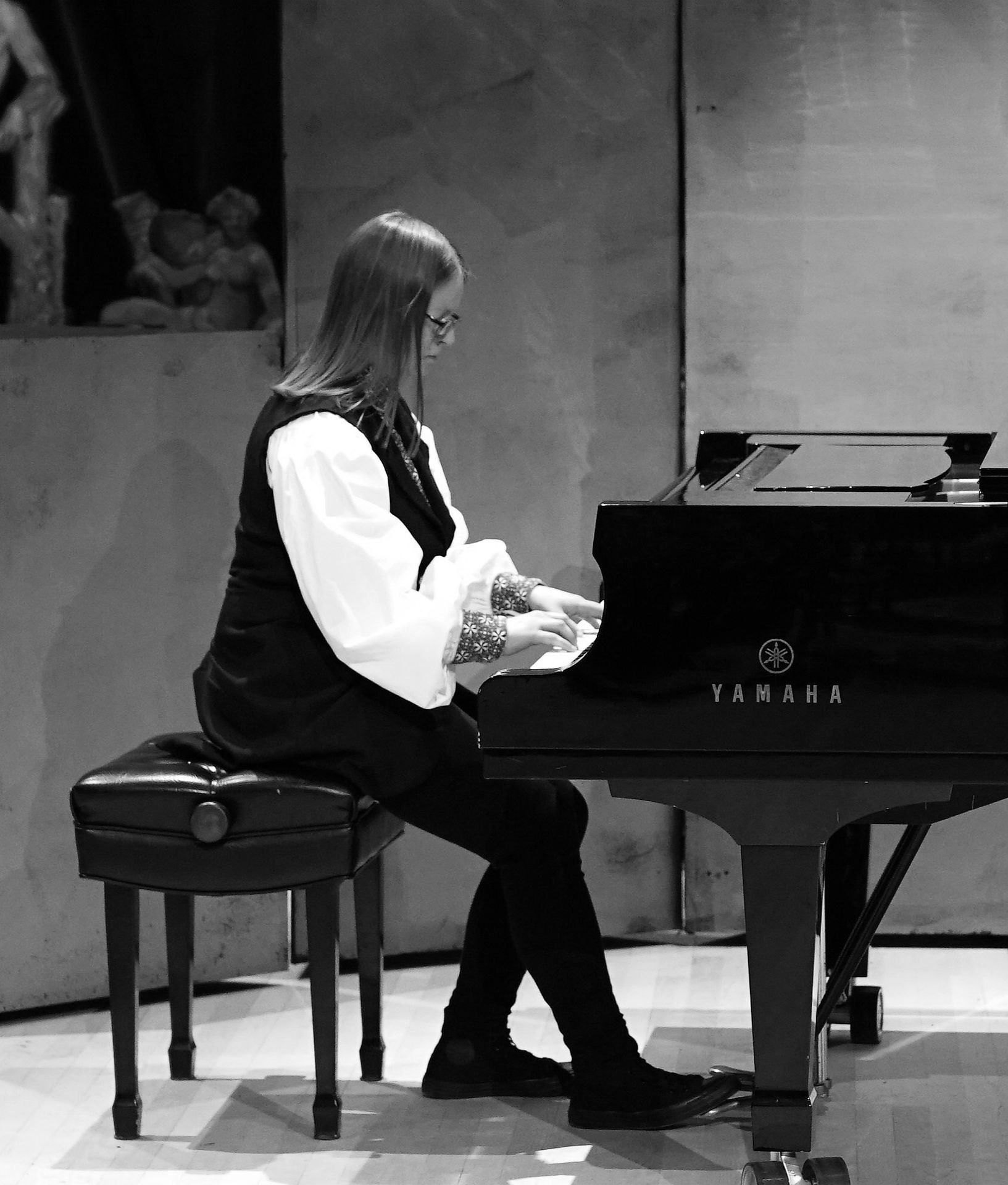
Jarred Dunn: Masterclass & Recital - Peabody Institute, April 18th, 2026

On Saturday, April 18th, students of the Peabody Preparatory school in Baltimore, Maryland had the opportunity to work with concert pianist and pedagogue Jarred Dunn during a masterclass, which was followed by a performance and Q&A session. While this was undoubtedly an invaluable experience for the students with whom Dunn worked directly, the benefits of the event extended equally to the audience members, who were treated to a demonstration of Dunn’s masterful teaching—a testament to the fact that beauty is not limited only to artistic domains.
Rapidly diagnosing and addressing issues both technical and expressive, Dunn coached the first participant through Mozart’s K. 333. His clear instructions and demonstrations facilitated changes that were immediately audible in the audience, allowing the student to better express the vibrancy and playfulness for which the composer is known. At the same time, Dunn’s interactions with the students balanced expertise with respect for their artistic autonomy. This quality shone through particularly well during his work with the second participant on Liebermann’s Gargoyles, where his commentary focused on understanding the student’s interpretive goals and developing the ability to communicate that to the audience.
Although the masterclass proved that Dunn’s artistry applies just as much to his teaching as to his concertizing, it was his performance of Schumann’s F# minor piano sonata that was the highlight of the event. Written by Robert Schumann under the names of his alter egos, Florestan and Eusebius, and dedicated to his wife, Clara, this sonata is marked by an emotional intensity that serves to connect its many contrasting sections—an intensity which Dunn expertly communicated throughout the entire performance. Even in passages where the music’s thick textures would have been better served by a larger hall, Dunn’s careful voicing and nuanced tone colors ensured that individual voices remained clear. The orchestral quality of his sound was such that when motives from earlier movements appeared transformed or fragmented in later ones, they remained immediately recognizable, as if passed from one instrument to the next, changing color while never losing their character. The overall effect was a level of continuity that transcended the boundaries between movements, allowing the audience to become lost in a musical narrative in which distinctions between past, present, and future began to lose meaning.
While the entire performance was impressive, it was the recurring dance-like 3/4 passages in A major that had perhaps the most profound effect. Here, Dunn’s accompanimental voices exhibited a richness that was balanced by a delicate, velvet touch, so that they seemed to envelop glistening melodies in warmth without ever obscuring them. The sonic result was an impression of light viewed through water, glittering brilliance refracted through a soft, liquid overlay. With every occurrence, these passages filled me with such an amalgam of joy and sorrow that the image sprang unbidden to my mind of dances seen through eyes brimming with tears: Robert, imagining the bliss of dancing with Clara while overcome with poignant longing at her absence. Whether it was a vivid synesthetic phenomenon tied solely to the incredible quality of Dunn’s sound or whether my knowledge of the composer heightened the aesthetic impact, I cannot say, but in these moments I too was overcome, with a degree of abstract musical empathy that brought tears to my eyes. Rather than distracting, the sensation as they slowly trickled down from beneath closed eyelids only served to enhance the transcendental effect. Great performances suspend time, allowing the mundanity of physical existence to fade from consciousness, but Dunn’s was something more: I found myself both freed from and deeply connected to the corporeality of existence, as conscious thought and present feeling merged in a process of Hegelian synthesis.
The overall impact was such that even three days later it remained at the forefront of my mind, and attempting to recreate even a fraction of the experience, I turned to Elisso Virsaladze. However, as exceptional as her interpretation is, I was not fully satisfied. Perhaps it was only the difference between a live performance and a recording, but on Saturday Dunn brought a vibrancy and emotional intensity to this music which Virsaladze’s recording does not seem to match. Fortunately, Dunn’s upcoming monographic Schumann album will include the F# minor sonata, but until its release, I—and the rest of the audience members—remain limited to our memories of this outstanding event.